Opening a supermarket app has become a rare gesture. Chains invest serious money to get downloads — then watch engagement collapse in the following weeks. The problem isn't the launch push: it's what happens after.
In 2026, a grocery app that actually wants to be used has to stop being a flyer showcase and become a daily service tool. Here's what that means in practice.
The 5 features that move the needle
1. Smart shopping list, not a notepad
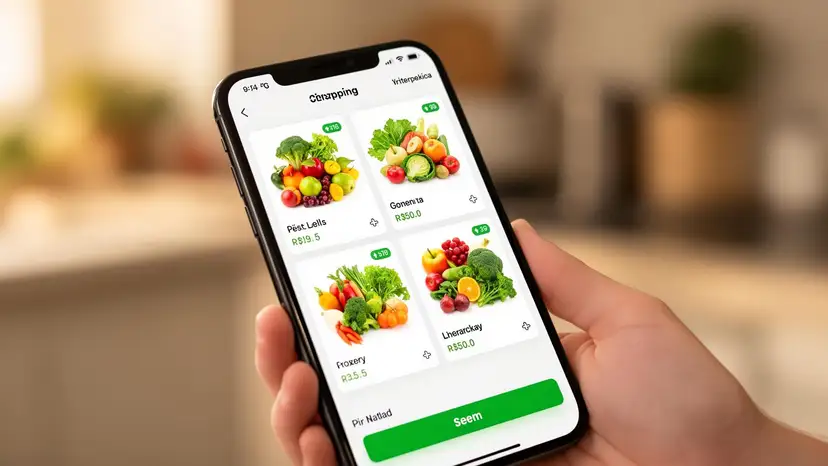
The list must autocomplete as you type — using the chain's real catalog, not a generic dictionary. It must recognize when an item is on promo and show it. It must be shareable with a partner in real time and remember what you usually buy.
The apps we see working have a list that "fills itself in": you type "milk", it suggests the brand you bought the last three times, tells you it's on promo, and offers the cookies you always buy with it.
2. Interactive flyer, not a PDF
The flyer PDF on mobile is a UX failure: tiny, slow, not clickable. A native interactive flyer inside the app changes the relationship: each offer is an object you add to your list in one tap, and you know if your nearest store has it.
3. Personalized couponing, not blanket discounts
A generic coupon converts at 1-2%. A coupon personalized on real customer consumption easily hits 15-20%. The difference: you need receipt history and an engine that decides what to offer to whom.
4. Real click & collect support
"Order and pickup" isn't enough: you need a clear bookable slot, a ready-for-pickup notification, a dedicated lane in store, and — above all — a substitute-item experience handled gracefully when something is out of stock.
5. Useful notifications, not promo spam
Users uninstall after 3-4 useless pushes. Notifications that survive: "the product you always buy is on promo this week", "your click & collect order is ready", "you have 250 points expiring Friday". Never more than one a week, never purely promotional.
What you DON'T need (even if it looks cool)
- AI-generated recipes not connected to inventory: customers open them twice, then never again.
- In-aisle augmented reality: great trade-show demo, near-zero real adoption.
- Heavy gamification (badges, levels, missions): in grocery user tests it converts to engagement under 5%.
- Virtual assistant chat: unless it solves 80%+ of queries, it hurts brand perception.
The most common strategic mistake
Thinking of the app as one more marketing channel, run by marketing, with campaign KPIs. Apps that work are built as service channels, run by product managers with adoption and retention KPIs. It's an org-design distinction that changes everything downstream.
If you're rethinking your app today, start with one question: "what use case do I want to make easier than the competition?". Pick one, choose well. Everything else builds around it.
Frequently asked questions
1What features must a supermarket app include?
An effective supermarket app starts with an always-updated digital flyer, a shopping list linked to promotions, a digital loyalty card and personalised coupons. Everything else is secondary if these four pillars don't work well.
2How much does a supermarket app cost?
In 2026 a native iOS and Android grocery app typically starts at 25-60k euros when a flyer backend already exists, shipping in 8-12 weeks. Costs grow with ERP and loyalty-card integrations.
3Why are grocery loyalty apps barely used?
Because they only offer points, not a daily reason to open them. The most used apps solve a concrete use case — finding the deal, building the shopping list, saving time at checkout — better than any alternative.
Have a grocery app that isn't being used? We do free half-day audits.
Request the audit